Sunday, May 22, 2011

Blaming the Food, part 1: Measuring Bad

"Measurement is the first step that leads to control and eventually to improvement.  If you can't measure something, you can't understand it.  If you can't understand it, you can't control it.  If you can't control it, you can't improve it."
                                                  -H. James Harrington  
For the past few hundred years, there have been two schools of thought regarding diet and obesity.  One says that no one food is inherently fattening and so we must endorse universal moderation.   The other says that there are most certainly fattening foods and that they should be avoided, or at least restricted, to stave off or reduce body fat.  It has only been in the past thirty or forty years that dietary fat has been regarded as particularly fattening; starchy and sweet foods have long been regarded as the foods that lead to corpulence.  But the notion that refined carbohydrates are fattening has been just that - a notion.  Is there some way that we can measure or quantify the "fattening-ness" or "obesogenicity" of one food over another?

In the early 1980's, the Glycemic Index (GI) was developed by Dr. David Jenkins to establish the physiological basis for the carbohydrate exchange program that was prescribed to diabetics.  Specifically, the GI quantifies the blood glucose response to different foods based upon a standard amount of carbohydrates in the food (Jenkins American Journal of Clinical Nutrition 1981 24: 257-264).  It is used as an indicator of how fast or slow glucose is absorbed from foods.  At this time, diabetics were being prescribed a high carbohydrate diet (45-55% kcal in the diet) rather than the traditional moderate carbohydrate diet (30-40%) that had been used even after the advent of insulin (The Hartford Courant, 2 January 1983); therefore, it was prudent to establish which carbohydrates would be better tolerated by diabetics in order to maintain sufficiently low blood glucose levels.  The GI would offer a quantitative way to validate this exchange program.

Briefly, the GI is determined by first measuring changes in blood glucose over the course of three hours after eating a single food.  The portion of food is the amount of food that contains 50 grams of carbohydrate.

The glucose response to this test food is then compared to the response of a standard food - a 50 gram glucose solution or bread - by taking the quotient of the area under the curve of each response.  This quotient is multiplied by 100 so that the GI is a whole number.  If pure glucose is used as the test food, then all other foods have a glycemic index of 100 (equal to pure glucose) or lower than 100; if bread is used as the test food, then foods such as glucose and cornflakes will actually be higher than 100.
The results of the GI are not entirely revolutionary.  Meats and dairy have a considerably lower GI than starchy foods, and beans fall somewhere in between, although they are closer to meats than starches.  However, the GI does give some interesting insight.  Despite both being composed of processed wheat, the glycemic index of pasta is 40% lower than that of bread; and boiled white potato is nearly as high as pure glucose while sweet potatoes have a GI of half that.  But it is far from perfect.

Since the inception of the GI, it has taken considerable - and plenty deserved - criticism.  For one, it looks at foods in isolation, which by and large, is not how we eat our food.  Protein can raise insulin, which will lower glucose in the blood, and fat retards digestion and absorption, which may explain why when foods are combined, the predicted GI often diverges from the observed GI.  Furthermore, not every food is eaten in 50 gram portions.  Carrots and white potatoes both have an exceedingly high GI, but a person would have to eat nine medium carrots versus one and one-half white potatoes to achieve that 50 grams of glucose.  So how can this be accounted for?

In 1997, Salmerón and colleagues (Salmerón Diabetes Care 1997 20: 545-550) published a study looking at the influence of the GI and intake of cereal fiber on the risk for developing Type 2 diabetes.  In their paper, they introduced the Glycemic Load (GL).  Because insulin is secreted primarily in response to dietary carbohydrate, the GL was used "as an indicator of a glucose response or insulin demand induced by the total carbohydrate intake."  Or more succinctly, GL estimates the insulin response to a single food, a meal, or an entire diet.  The GL is the product of the carbohydrate content of a food (or meal) times the GI of the food (or meal), which is then divided by 100 in order to return the GI from a whole number back into a ratio.


We now have two estimates for the bodily response to dietary carbohydrate.  Glycemic index is an estimation of the rate of absorption of carbohydrates from different foods.  It is valid if two different foods have similar portion sizes or contain a similar amount of carbohydrate.  The glycemic load estimates the insulin response that will be induced by different foods.  Because it takes into account the carbohydrate content of the food, it remains valid for foods that are not commonly eaten in 50g portions and can be used to differentiate between foods of varied carbohydrate composition that have similar glycemic indexes.  But to be critical scientists, we want to know: Are these estimates complete?  Do they accurately depict how our foods affect us? Can they be used to determine the obesogenicity of a food?  And if they can, is it reasonable to translate it from laboratory to table?

Tuesday, May 17, 2011

High fat diet for a high fat liver

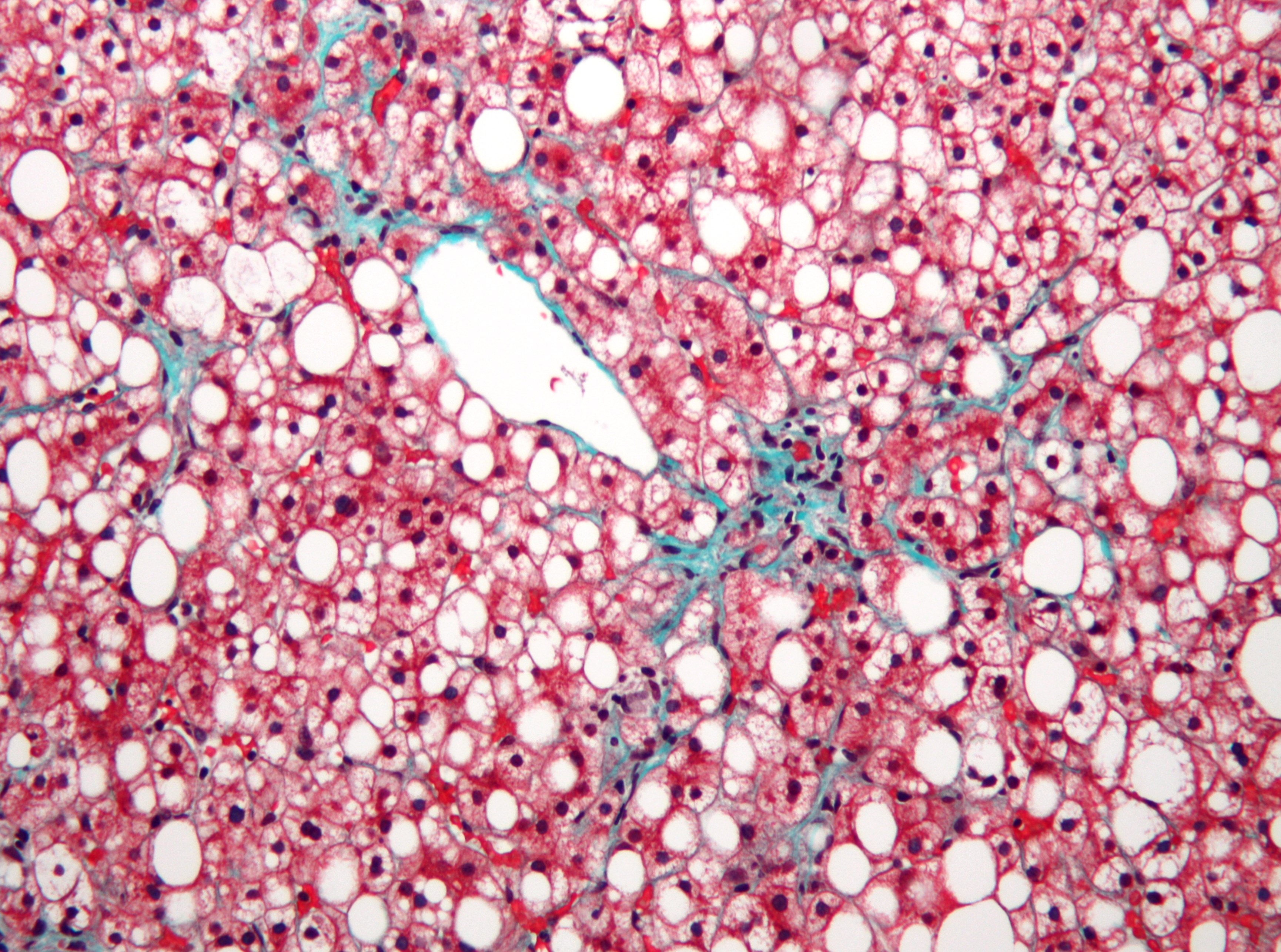
Non-alcholic fatty liver disease (NAFLD) is a consequence of obesity and insulin resistance that is characterized by an accumulation of fatty deposits (triglycerides) in the liver.  This can lead to further insulin resistance, inflammation, and even fibrosis - similar to the damage seen from excessive alcohol consumption, and hence the name.  Under the microscope, a healthy liver is densely packed with magenta hepatocytes (liver cells), while a fatty-liver is infiltrated by white lipid droplets and eventually the blue-green scars of fibrosis.  Paradoxically, at least seemingly, researchers have previously shown that a low-carbohydrate high-fat diet leads to weight loss and reduction of fatty liver, but is the reduction of fatty liver merely a result of the weight loss?

Healthy human liver
Source: Wikipedia

NAFLD liver
Source: Wikipedia


Browning and colleagues conducted a two week trial where two nine-person groups of men and women were either put on a calorie restricted diet (CR) or a low carbohydrate diet (LC).  The CR diet consisted of 1,200 to 1,500 Cal per day.  The LC diet contained no more than 20 grams of carbohydrate per day and the subjects were allowed to eat ad libitum - they did not have to intentionally decrease food intake.  Nuclear magnetic resonance spectroscopy was used to determine the triglyceride content of the subjects' livers before and after the intervention.

Both groups lost a similar amount of weight, eight to ten pounds on average, and both groups showed a reduction in liver fat.   “However, given a similar degree of weight loss, the low-carbohydrate diet resulted in significantly greater intrahepatic triglyceride [liver fat] reduction than did the low-calorie diet” - a 28% reduction in the CR group compared to a 55% reduction in the LC group.  Both groups showed a similar reduction in blood triglycerides with no impact on total cholesterol.  When both groups were combined, a greater reduction in fatty liver content was associated with both lower carbohydrate intake and higher fat intake, and not with protein intake.  Greater fat metabolism, as measured by higher blood ketone levels and lower respiratory quotient, had the strongest association with liver fat reduction.  While it cannot be directly determined from this study, these data are consistent with the notion that a lower carbohydrate intake permits greater fat utilization, which in turn reduces fat sequestered in the liver, and that this is, or at least some of it is, independent of weight loss.

Conceptual representation of associations.
  
Note:  Degree of association and predictive power not to scale.
There is no question that this study has many limitations, especially in regards to therapeutic outcomes.  The study was short and did not measure changes in liver histopathology i.e. fibrosis. But it challenges a popular notion of dietary fat.

Most people on the street believe that eating fat will make you fat.  By extension, they probably expect a high fat diet to induce fatty liver disease, or at the very least, make an already fatty liver worse.  This study turns this idea on it's head - it literally inverts the notion.  While this study only showed that carbohydrate restriction can reduce fatty liver, can eating too many carbohydrates, at least the refined ones, contribute to fatty liver?  History may give us some insight, as excessive carbohydrate feeding has been exploited for centuries to produce the quintessential, albeit controversial, delicacy known as foie gras.

Foie gras - whole liver
Source:  Wikipedia
Foie gras is primarily associated with the French, who indeed hold domain over the name itself.  To produce foie gras, geese are force-fed so that their livers become enlarged and fattened.  This is obviously different from the human case since humans are not force-fed and because geese livers naturally increase fat storage prior to seasonal migration; although geese do not naturally fatten their livers six to ten times that of normal size.  And what is fed to the geese to accomplish this feat?  Refined carbohydrate.

According to Wikipedia (while I'm typically dubious of Wikipedia, this article was well referenced), geese are force fed a "high starch" diet consisting of corn feed.  The feed is sometimes fried in fat to improve digestion.  Furthermore, this practice has ancient roots.  In his encyclopedic work Naturalis Historia, Pliny the Elder, a first century roman intellectual understood "...the same artificial method of increasing the size of the liver of the sow, as of that of the goose; it consists in cramming them with dried figs..."(Perseus Digital Library).  It is probably not a coincidence that the ancient Romans or the French use concentrated fruit sugar or starchy food, respectively, rather than more calorically dense fatty foods such as pure lard or oils, to fatten the livers of geese.  While I am of course extrapolating history to pathophysiology, I am confident the fatty-liver market has optimized the methodology of production.  Fat does not simply beget fat.


Monday, May 16, 2011

Tuna Two-ways

I want to share some good eats that I had over the weekend.  I bought (well, I shopped but my mom paid for) Ahi Tuna as a treat for the weekend.  I also bought plenty of vegetables, and was able to use my new salad spinner for the massive bag of spinach that I bought.

Friday night, my mom and I had seared tuna served with an orange-and-avocado salsa, and a side of grilled veggies.  We had some berries and cream for dessert.


Orange-and-avocado salsa
  1. Cut away peel of an orange a slice away each wedge of the fruit from the pulp.  Leave the pieces of orange relatively large, although you may want to chop each in half.
  2. Dice an avocado and some red onion, and mince 2 tbsp of cilantro.
  3. Whisk juice of 1 lime, the orange juice squeezed from the remaining pulp, salt, pepper, and a dash of cayenne (or dice jalapeño if available).
  4. Combine the juice mixture with the fruits and cilantro, stir, and serve over seared tuna steaks.
On Sunday night, the girlfriend and I ate the remaining tuna.  I seared it and served it over spinach with bell pepper, avocado, and orange slices.  The dressing was an orange-lime-cilantro vinaigrette.  We also made another batch of the Thai carrot ginger soup from last week. 


Oh, and we had cocktails before dinner...

 Diet Moscow Mules (vodka, lime juice, diet ginger ale).

Friday, May 13, 2011

Know your ketones


I have been aware of ketones since my college nutrition class, but I've never had anyone explain them outside of "a product of fat metabolism."  Ketones are a nutritional antihero - they are a critical part of our physiology, but they have developed a certain mysteriousness and notoriety.  While this makes for an exciting adventure through nutrition books, it hinders the public understanding of nutrition.  As such, ketones and ketosis have become red herrings due to poor information.  And this is as good of a time as any to discuss what ketones are, and how and why they are produced.


Source: Wikipedia

"Ketones" refers to a family of compounds that contain a particular functional group, or more simply, a specific structural signature.  The adjacent images are the three ketones relevant to ketosis in the body and are often referred to as "ketone bodies."  And don't worry, I don't take anything away from their molecular structure either.  From top to bottom, they are acetone, acetoacetate, and β-hydroxybutyrate (BHB).  Fatty acids are metabolized into acetoacetate and BHB to be used for energy, and acetone is a spontaneous byproduct.  How ketones become useful gets a bit more complicated.  


Understanding ketosis requires a brief detour into food catabolism - the metabolic process that breaks down our food for energy.  Carbohydrates, fat, and protein can be used to produce energy.  We can either eat them or take them from our body stores (glycogen, body fat, and muscle, respectively).  To get energy from these foods, we eventually want them to undergo a metabolic process known as the Tricarboxylic Acid Cycle (TCA cycle, or Kreb's Cycle).  Acetyl-CoA is the molecule that enters the TCA cycle to produce the necessary metabolites for aerobic metabolism and subsequent energy production.  Through different metabolic processes, carbohydrates, fat, and protein can be converted into acetyl-CoA, and therefore all can converge onto the TCA cycle and eventually produce usable energy.

Simplified depiction of aerobic metabolism

Our bodies preferentially use carbohydrates and fat for energy when carbohydrates are plentiful.  When carbohydrate availability becomes sufficiently low, such as during exercise, prolonged fasting or starvation, or during uncontrolled insulin-dependent diabetes, our bodies will use protein to make glucose and shift heavily towards fat metabolism.  Muscles will readily metabolize fatty acids for fuel - either from circulating fats or from fat stores within the muscle.  The brain, however, cannot directly metabolize fat, but can do so indirectly by using ketones.  The ketones are produced exclusively in the liver, where fatty acids are converted to acetyl-CoA then to ketone bodies.  These ketone bodies circulate to muscle and the brain, where they are reconverted into acetyl-CoA and further metabolized for fuel (just like our food “substrates” in the figure above).  This increase in ketone production, and concomitant elevation in the blood, is ketosis.

Ketone production and distribution.  
Source: FreeDigital Photos.  Liver = dreamdesigns, brain=smokedsalmon,  arm=ambro   

It is often stated that the brain needs a certain amount of glucose, and therefore we must eat this amount of glucose.  However, this is overstated.  In the presence of sufficient carbohydrate, the brain will preferentially metabolize glucose; but the brain has no problem using both ketones and glucose produced from protein (the body ensure glucose is produced for the brain).  As an analogy, children will preferentially consume soda rather than vegetables, but we don’t simply conclude that children must consume a certain amount of soda.  Furthermore, according to Freeman and Kossoff, the newborn brain will "avidly" use ketones for fuel, and the developing fetus uses ketones to form the myelin that surrounds the nerves.  And as Brooks, Fahey, and Baldwin explain in the prominent textbook Exercise Physiology: "During dietary starvation, the ability to sustain life depends on the bodies ability to form and utilize ketones."  However, we can also enter ketosis while forgoing starvation.


In the succinct words of Freeman and Kossoff, "the ketogenic diet is a high-fat, adequate protein, low-carbohydrate diet designed to produce ketosis through mimicking the metabolic changes of starvation."  The "classic" ketogenic diet is comprised of a greater than 3:1 ratio of fat to carbohydrates and protein.  This diet has been used to control seizures in epileptic children since the 1920's and is "as effective, perhaps more effective, than current anticonvulsant medications."  However, few people, even low carb fanatics, will maintain such a herculean diet since consuming more than adequate protein will halt ketosis, at least transiently.

"Classic" ketogenic meal

Despite it's notoriety as a ketogenic diet, the Atkin's diet is better described as a "transiently ketogenic" diet - to borrow a phrase from Robb Wolf - and ketosis will likely only occur during the "induction phase" of the diet.  Since the Atkin's diet relies heavily on meat and vegetables, and less so on cream and eggs, it is comprised of a roughly 1:1 ratio of fat to carbohydrate and protein.  Each high-protein meal would likely halt ketosis, but delaying a meal and fasting overnight (sleep) would likely permit ketosis.

"Transiently ketogenic" due to high protein content (and wine!)

And what about ketosis and diabetes?  Diabetic ketoacidosis can occur when an insulin-dependent diabetic is not treated with insulin.  Without insulin, most cells cannot use the accumulating blood glucose so the body “thinks” it is starving; the liver than continually produces more and more ketones.  The accumulating ketones acidify the blood, which is exasperated by dehydration caused by glucose (and water) excretion into the urine.  This is acidosis and will lead to coma and death if not treated with insulin.  Of note, ketoacidosis-induced coma can be distinguished from insulin-induced coma by the "fruity" smell of acetone on the breath.  Remember that I said acetone is a spontaneous byproduct of ketone production?  While I couldn't find consistent numbers for ketone levels in dietary ketosis versus ketoacidosis, ketoacidosis has blood ketones somewhere between 20-30 times higher than non-ketosis levels and between 4 to 10 times higher than dietary/fasting ketosis.  Ketosis is physiological and regulated; ketoacidosis is pathological.

So after all this, simply stated, ketones are a product of fat metabolism.  But a product that allows our brain, and therefore us, to survive without dietary carbohydrate.  Antagonists of low carb diets frequently portray ketosis as a boogeyman, even though there is little reason to think that it is.  However, as the blogger HyperLipid has asked, "I think it's an open question about whether placing yourself at the very extremes of physiology is a good or a bad thing.  It should certainly assist weight loss, but would it improve health?"  At the very least, we can say that ketosis is a normal physiologic process.  And if starvation or carbohydrate unavailability was a semi-frequent occurrence in our evolutionary history, than perhaps we can compare ketosis to vigorous exercise – total avoidance is more abnormal than normal.


Sunday, May 8, 2011

A great new soup

Thai Ginger Carrot Soup


Last night, the girlfriend and I tried out a new soup.  I got the recipe from The Table of Promise.  Please check out her blog for the recipe.  Carrots and some flavorings are simmered until soft, blended, and then coconut milk is added to make it nice and creamy.  A unique tasting and delicious soup for the repertoire.

A new farmers market started in downtown Orange this Saturday, so we were able to pick up some fresh ingredients for our dinner.  We had margaritas with chips and guacamole for starters, and soup and salad for dinner.


Thursday, May 5, 2011

Fat cells: Is it the size or the number?

Obesity is tightly associated with virtually all "western diseases," including high blood pressure, diabetes, gout, and dyslipidemia.  Insulin resistance (type 2 diabetes) is similarly associated with these diseases.  This is why researchers have begun to use the literary gem and public health nightmare "diabesity" when referring to our current health epidemic.  Thus, researchers are diligently trying to tease apart the associations and mechanisms that explain diabesity.
  
Veilleux and colleagues published a study in this month's issue of Diabetes looking at the predictive power of the size and number of adipocytes (fat cells) on markers of dyslipidemia ("poor blood lipids").     They found that the enlargement of abdominal adipocytes was independently associated with changes in blood lipids consistent with the metabolic syndrome.

Source: flickr
Above is a photomicrograph of adipocytes.  The dark splotches are the nuclei of the cells.  The big white space?  That's a large lipid droplet.  Adipocytes store fat to be used for energy, and as you can see, they are very good at what they do.  Our fat stores can increase by either enlargement of the adipoctyes or an increase in the number of adipocytes, or as is common in biology, a combination of the two. And all of these cells aggregrate to form different fat depots in the body.  
    
Two of the main fat stores are subcutaneous fat - meaning under the skin - and omental fat, which rests behind the abdominal wall.  The gynoid, or "pear shape," fat distribution refers to subcutaneous fat distributed around the hips and buttucks, and it is associated with a decreased risk of dyslipidemia.  Android, or "apple shape," fat distribution refers to abdominal obesity, and is associated with an increased risk of dyslipidemia.  But remember, a large gut is composed of both subcutaneous fat and omental fat; both tend to increase together but it is the omental that seems the most deleterious.
Abdominal subcutaneous fat
Source: FreeDigitalPhotos

Peripheral subcutaneous fat
Source: FreeDigitalPhotos

Given the known complications of body fat, researchers wanted to look to see if the association between omental fat and dyslipidemia was more closely related to enlarged adipocytes or a higher number of adipocytes, independent of fat distribution or fat mass.  Obese women who were undergoing surgery had biopsies taken of their omental and subcutaneous fat.  These biopsies were then used to categorize the women by adipocyte hypertrophy (enlargement) or hyperplasia (high cell count) for both subcutaneous and omental fat stores.  Blood markers for dyslipidemia - particularly representing hypertriglyceridemia, or elevated triglycerides, were then coupled with the adipocyte data to develop a predictive model - that is, how do adipocyte characteristics predict dyslipidemia.

The most pronounced finding was that sufficiently large omental adipocytes increased the risk of hypertriglyceridemia by 4-fold, whereas sufficiently many omental adipocytes only increased the risk by 1.5-fold.  The size or number of subcutaneous adipocytes showed no increased risk of elevated triglycerides.  These changes in risk were seen after several factors had been adjusted for - such as body fat mass, BMI, and others - and so represent the independent contribution of these adipocyte characteristics.  The enlarged omental adipocyte group further demonstrated dyslipidemia in other triglyceride-related blood markers, although the results were less dramatic.

Figure: Conceptual representation of the results
And perhaps you are wondering, do enlarged omental adipocytes cause the dyslipidemia?  Does the dyslipidemia cause the enlarged adipocytes?  Or is there something else that causes them both to occur in lockstep?  An interesting piece to the puzzle is that surgical removal of omental fat does not improve dyslipidemia.  Or only seems to do so in the short-term when it is accompanied with the already-shown-to-do-so gastric bypass surgery (article on recent findings).  Those data would indicate that it is not the omental fat that causes the dyslipidemia.  But given the Veilleux study we just discussed, perhaps surgical removal would work if the patients had predominately large omental adipocytes, rather than many.  

While it's well known that obesity is tightly associated with dyslipidemia and metabolic syndrome, these data are the first to specifically examine adipocyte "cellularity" with metabolic derangement in obese women.  Admittedly, this experiment is more interesting from a physiological or mechanistic standpoint - everyone knows that abdominal obesity is both unhealthy and no one is happy with their "gut" regardless of the cellular mechanism.  So while we wait for that eventual discovery, let's agree to keep our visceral fat cells both small and few.


Sunday, May 1, 2011

Omelet with Berries, or, the Low Carb Pancake?

     I had breakfast with my mom this morning, and in good form, we had a low carb - "whole food" sort of meal.  We have been meaning to try one of her long-lost recipes that she realized would be great for low carb eating.  I do not know quite what to call it, but it is simply eggs served with sour cream and berries on top.  It is essentially a low carb pancake.


     My mom learned about this recipe from a diner back in Minnesota and it was originally served with strawberries.  I generally do not like to eat low carb version of carb-heavy meals (low carb "x").  I prefer meals that are inherently lower in carbs or that easily translate.  "Low carb lasagna," which is layers of spinach, vegetables, meat, and cheese is not lasagna and just does not quite do it for me.  I prefer to have meals such as lasagna as a Saturday supper or a celebration food.  But it is nice to find alternative-like meals.
     While this meal is reminiscent of pancakes or crêpes, it really is it's own thing.  It has a certain Bon Appétit flare, or dare I say sophistication.  It would be excellent (egg-cellent?) for brunch.  But I see it as a weekend meal that can fulfill that Saturday morning pancake craving.

Egg Pancake with Fruit
  1. Whisk one or two eggs with cream and a small pinch of salt.
  2. Fry egg in butter - stir egg initially to create lumps of cooked egg, then cook flat.
  3. Flip once and cook until just finished - although the girlfriend would prefer well done ;)
  4. Spread sour cream, top with fruit, and sprinkle a dash of Splenda or even sugar.  Or no sweetener!
     We served it with bacon and split an orange from the backyard.  Oh!  And we had peaberry coffee that was gifted to me by some friends who recently visited Kauai.  Remember, "low carb" doesn't mean "no-carb."  So always remember, a breakfast like this has plenty of variety, and is more nutrient dense than a bowl of even the most whole-grain cereal.  

Good morning!